


This edition of The West End News Portland Climate Dispatch is sponsored by Go-Go Refill. Interested in sponsoring our local climate reporting? Contact Tony Zeli at thewestendnews@gmail.com.

A new city-wide native plant project is growing out of the City of Portland’s Sustainability Office. It’s called Grow Wild, and it is rolling out mid-late August 2026.
Troy Moon, the Sustainability Director for the City, said that through the years, “the City of Portland has increasingly become a food desert for native pollinators and birds.”
The hope is that Grow Wild will transform Portland’s streets, yards, sidewalks, and overlooked urban nooks into vibrant, life-giving native habitats. Planting native plants in our communities supports our local ecosystems and our food web. Making sure that birds, insects, and pollinators are fed and nourished is critical to the growth of the foods that we depend on to sustain our own species. By feeding the pollinators, we feed ourselves, or, as the Sustainability Office points out on their website, “we nourish ecosystems which nourish us.”
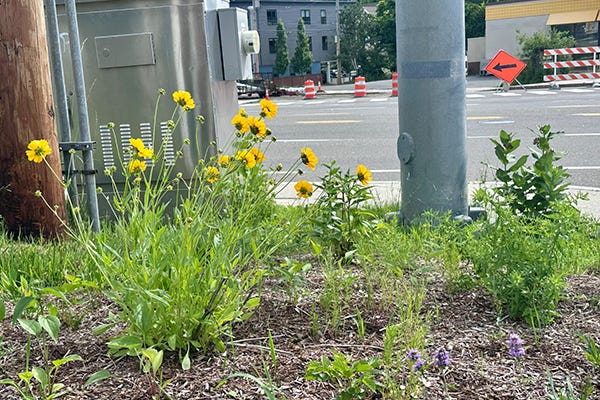
Native plants provide both an abundance of life sustaining nourishment and nesting and mating grounds for native insects, butterflies, and songbirds that non-native ornamentals and invasives aren’t able to provide. For example, some insects specifically require New England species leaf litter for reproduction.
At the heart of Grow Wild is the Portland community. Grow Wild will encourage Portlanders to plant native plant species wherever they can — in their yards and gardens, in sidewalk strips (sometimes referred to as an esplanade), in a pot on their steps, in a can on their porch, or in a window box.
“This project is for everybody, if you have a window box or some planters you could put on your steps, that is great, we want people to see these small spaces as an opportunity for installing native plants but really…everyone can do something,” said Moon.
Grow Wild envisions providing some growing kits, educational resources, and planting tips to help residents come together to plant attractive, low-maintenance, chemical-free, drought-tolerant, pollinator-friendly plants that will strengthen both climate and community resilience.
“I think Grow Wild Portland is timely now because it aligns with goals in our climate action plan to improve biodiversity by creating and connecting natural habitats,” he continued.
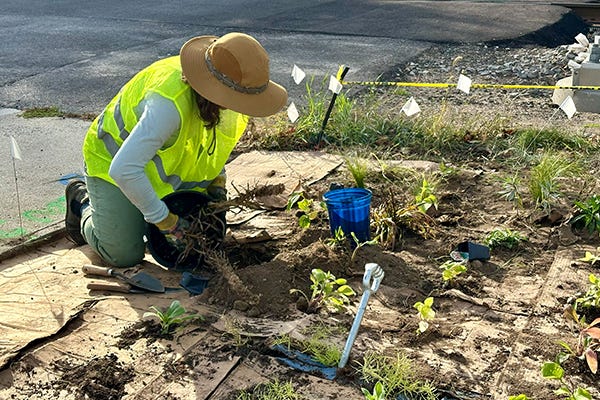
Rugged Native Plants: Good for Garden & Climate
In 2020, Portland adopted One Climate Future, a climate action and adaptation plan that focuses on building resilient communities in Portland, while helping residents adjust to a changing climate. An integral part of this action plan is “landcare,” which extends beyond traditional gardens and yards, and encourages community level care for city spaces in ways that support healthy ecosystems, with a focus on native plant species.
Betsy Tesh is a local horticulturalist, garden designer, and native plant enthusiast who serves on the Board of Directors for the Friends of Woodford’s Corner. Through her involvement with the Friends, she has been leading a native plant garden design and installation at Saunder’s Triangle at Forest and Ocean Avenues.
Tesh said that the City has been very supportive of their native plant garden project, and were “very helpful answering questions during the planning phase.” She shared that as a designer and native plant gardener, she appreciates the role that native plants play in the ecosystem. “When I learned that native plants provide better nutrition and habitat for our non-human neighbors, they became my go to for garden design.”
It is relatively easy to plant and care for native plants when they are matched with the right growing conditions. Because native plants adapted to the local climate and diverse habitats within the state, once established, many plants native to Maine and New England can thrive with little maintenance. Some plants in particular evolved in drier, fast-draining, nutrient-poor soil, which has made them incredibly resilient to seasonal extremes like drought, and therefore they are also resilient in an urban setting like Portland’s.
The ease of native plants is an attraction for plant lovers. “I love how rugged native plants are and that they can thrive in tough, urban conditions,” Betsy Tesh shared. She says that they are her “go-to when designing new gardens.”
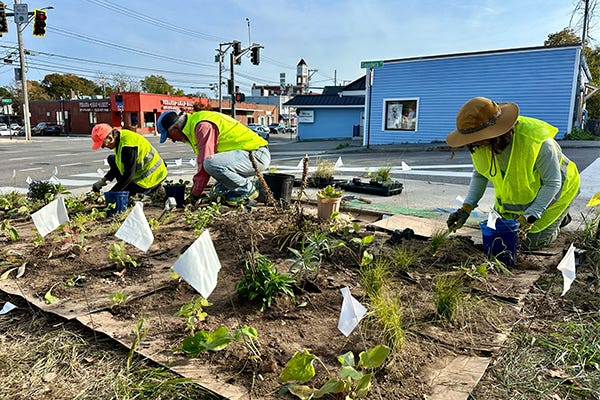
Neighbors Helping Neighbors
Portland’s Sustainability Director Troy Moon said the Sustainability Office is currently envisioning that Grow Wild will have a real time “interactive story map where residents can update information about the native plants they are planting in their yards and on their street to show the spread and growth of native plant corridors across the city and see them branching out.”
Signs will also be given to participants so that neighbors and passersby can learn more about the project and engage with one another about their adventures in planting.
“We hope to see neighbors helping each other do this, and sharing ideas, maybe there is a great way to plant complementary plants,” said Moon, expressing the need to “have a successive bloom throughout the whole season to make sure we have food for our insects in spring, summer, and fall.”
Moon also hopes that once Grow Wild is underway, that neighbors, along with community and neighborhood groups, share seeds, plants, and planting tips with one another.
The hope is that Grow Wild doesn’t just connect pollinator and plant corridors, but that it will connect corridors of neighbors and neighborhoods across the city, as well.
How to Get Involved with Grow Wild
The program officially rolls out later this month. Updates about the roll out of Grow Wild will be posted on the website of the Sustainability Office and on their Instagram page. Follow them on Instagram @sustainableportlandme. Other updates on the project, webinars, events, resources, and other Grow Wild opportunities can also be found on the Grow Wild webpage. The Sustainability Office encourages residents to reach out to them at landcare@portlandmaine.gov with any questions.
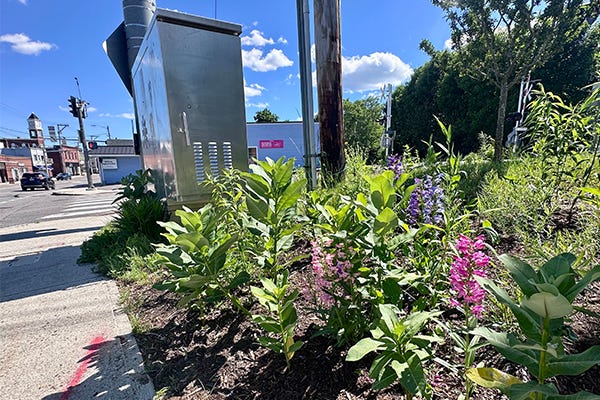
Curious Portlanders can also observe the City’s native plant gardens demonstration project as it is installed along North Street from spring through fall 2026.
About the Author
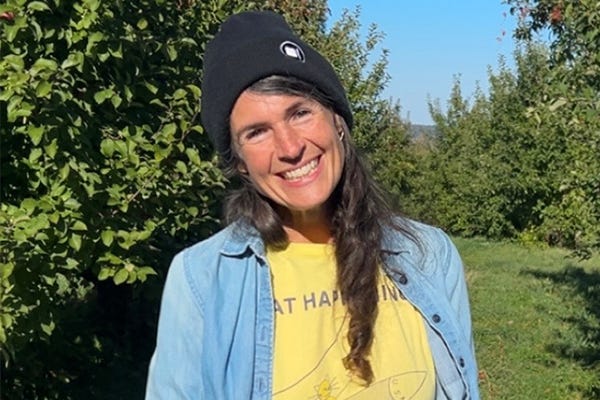
Bre Chamberlain is a Portlander from the before times, writer, grief integration specialist, and co-owner of a native plant nursery. She is a volunteer contributor for The West End News.
Do You Have a Local Climate Story?
As a Climate Ready Newsroom Fellow, we’re working with the METCALF Institute, a media program of the University of Rhode Island, to bring training and resources to our newsroom to produce long-term, accurate, and equitable coverage of climate change and its impact on Portland.
In the Climate Dispatch, you’ll hear local stories in real time about how climate change is affecting our daily lives and what local individuals and organizations are doing to protect the people and environment of Maine. Our number one priority is providing useful, trusted, local news without hype or controversy — for free to the whole community.
If you have a climate-related story you think we should cover — or ideas on how local media could cover the climate crisis — reach out to me and share your thoughts. I’d love to hear them.
We’re also looking for volunteer contributors who are interested in being trained to cover climate change, locally, as citizen journalists. Contact me today if you’re interested.
Support Local Climate Journalism
If you enjoy our free publication, please consider supporting us as a paid subscriber to help us:
Deliver the news. By supporting The West End News Substack, you are helping to deliver community news to more readers. Every month, WEN delivers 20,000 copies for free to local readers in Portland and also in the Cumberland County communities of Bath, Brunswick, Falmouth, Freeport, Gorham, Scarborough, South Portland, Westbrook, Windham, and Yarmouth.
Even small monthly contributions can help us print hundreds of additional copies to distribute to underserved news deserts in Southern Maine.
Support writers. Your paid subscription helps support freelance writers and the work they do to inform the community.
Feel good! Know that your subscription is helping to keep the tradition of the free community newspaper alive in Southern Maine.
WEN is almost entirely advertiser funded. That primary source of revenue is not going to change, but with your help we can do things a little differently. Thank you for supporting community print news and local climate journalism.
